
Iowa County Arrest Log Sources
The county sheriff's site offers no searchable multi-day booking log. Marengo carries the strongest official local archive. Its Daily Police Report page splits an Arrest Reports heading away from dated Call Logs. The arrest section sits empty. Call-log entries, though, run through August 2026 and back into the year.
That layout matters more than it looks. A call log gathers service calls, checks, and other police work that never leads to an arrest. An arrest made by the sheriff, Iowa State Patrol, another city, or a federal agency may never touch Marengo's municipal archive at all. So the page proves a publishing channel exists. It is not a complete Iowa County jail blotter.
Read Iowa County Police Blotters
Work backward by publication date. Never assume each link is a booking. A PDF or call-log date might mark the reporting period, the upload day, or a newspaper issue. Read the entry label first. Then identify the agency before tying the item to any other arrest record.
- Open Marengo's official Daily Police Report page and choose a dated Call Log.
- Note the call date, time, incident type, and agency wording actually shown.
- Do not label a call as an arrest unless the source says an arrest occurred.
- For an arrest, request the public report from the agency that created it.
- Ask the Iowa County Jail separately for booking or release information.
- Use Iowa Courts Online for the later filed case and its outcome.
A same-day concern takes a different route. The Iowa County 24 Hour Arrests page centers on current custody and processing lag, not dated municipal archives of recent arrests.
Iowa County Arrest Entry Fields
Iowa County publishes no single public log with a confirmed field list. Booking details live in different places. The comparison below shows where common facts may sit, and why a municipal call item should never stretch into a booking record.
| Record detail | Best official source |
|---|---|
| Call date, time, and event label | Marengo call log or the responding agency's CAD record. |
| Arrest date and agency | Public portion of the arrest or incident report. |
| Booking time and number | Iowa County Jail booking record. |
| Alleged charges | Booking record, complaint, and later court docket. |
| Bond, release, or transfer | Court order, jail release record, or VINE event. |
| Final disposition | Iowa Courts Online or the Iowa County Clerk of Court. |
Booking photos raise the same problem. The county posts no official public gallery. No municipal call-log page counts as a photo source either. If a lawful records purpose requires a photo, ask the custodian whether one exists and whether it is public.
Delayed Iowa County Arrest Posts
Weekend and holiday activity may surface in a later dated upload. The county follows no fixed posting cadence. A quiet archive page does not mean a quiet jail. Staff review shapes timing. Records processing, publishing schedules, and the split between city and county systems do the rest.
Check dates on both sides of the event. A Sunday call might land in a later file. Someone may also get released before a city log posts. The jail record stays with the county. For exact timing, request the arrest time, receiving time, release time, and source record by name. Those are separate timestamps.
Iowa County Log Archives
The visible Marengo archive reaches past a single week. An online link list is not a retention schedule, though. Iowa Code chapter 22 sets no one general retention period for all government records. Different record series can sit under different schedules. A removed web link says nothing about whether the underlying record still exists.
Historical records travel a separate path. The State Library inventory lists an Iowa County Jail Calendar from 1955. It also lists a Radio Log from 1972, older criminal files, and investigative reports. Those labels help a requester describe a series. They do not promise every year is complete, public, indexed, or online. The current jail opened in 2006. An older calendar may therefore reflect a different facility and past practice.
Start with the sheriff or municipal custodian. If material has transferred, the State Historical Society open-records portal takes specific subjects and date ranges. It answers first within three business days and finishes most requests within twenty. Storage and renovation conditions can affect access, so confirm availability before you travel.
Local Arrest News Has Limits
Weekly newspapers round out the picture once the official Iowa County sources are exhausted. The Marengo Pioneer-Republican and Williamsburg Journal-Tribune, both reached through NewzGroup, carry police-call and wanted-person items. Each issue stands on its own. That makes them archives to browse by date, not live jail rosters. Neither paper runs a mugshot gallery. Note the issue date. Then follow any arrest item back to the agency record or the court docket.
Hometown Current covers Williamsburg, Marengo, North English, and the surrounding towns. Access runs through a subscription, though. Its archive depth varies. Third-party arrest sites deserve even less trust here. One page labeled Iowa County actually sits in Wisconsin. Another leans on generic paid-access language. Treat the sheriff and the courts as the first stops. Never pay a private site to fix what an official record says.
Marengo handles public records through a Chapter 22 request page with its own form. The form wants a clear description of the record and a delivery choice. A $10 administrative fee applies, plus listed copy or report charges. Expect 10 to 15 business days once the cost estimate is accepted for nonconfidential material. Those terms belong to Marengo alone. The Iowa County Sheriff's fee schedule differs, and neither applies to Williamsburg or North English. For daily activity, the official Marengo archive view splits its content into separate Arrest Reports and Call Logs headings.
A dated list of local arrests is a starting point, not a full Iowa County booking history. It shows who was arrested and when, but a case does not end there. For whatever gets filed in court, the official Iowa Courts Online entry point is the place to look next.
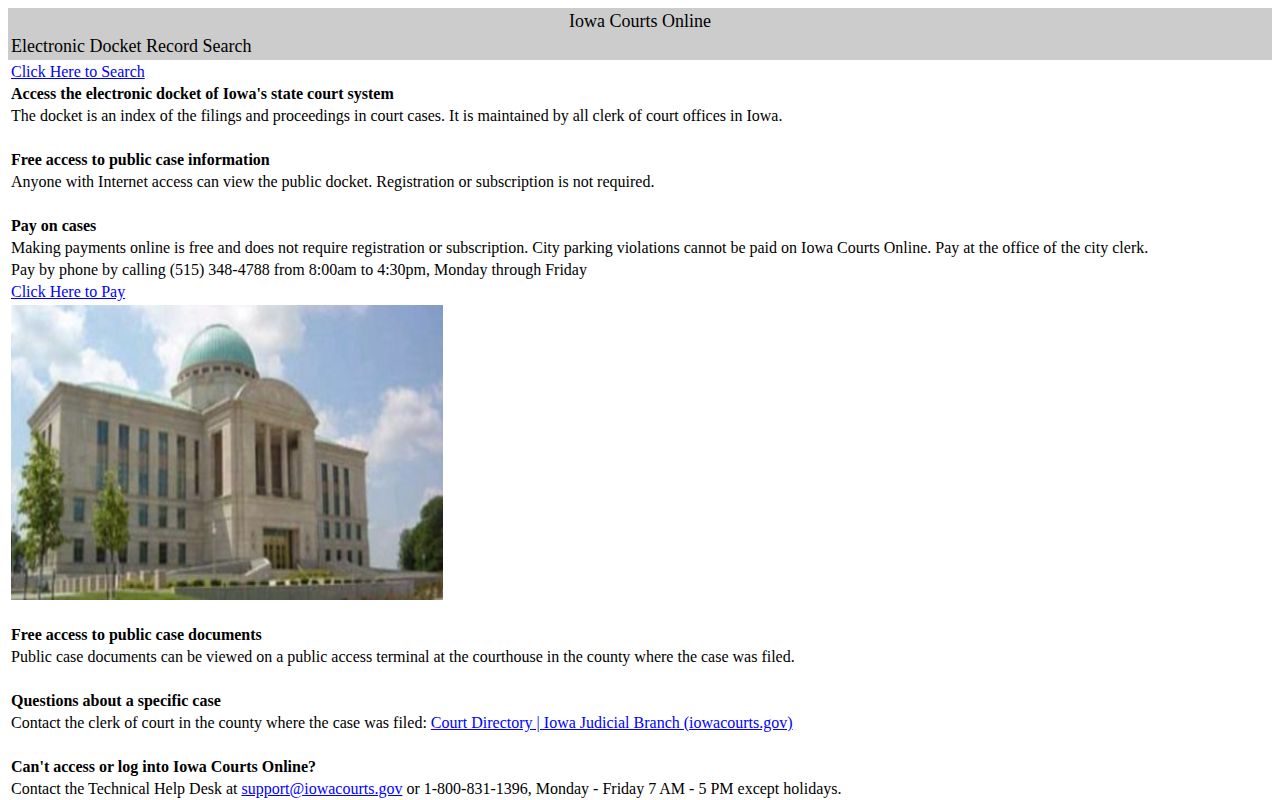
Court entries can track a case after the arrest. Yet they will not show who sits in the jail right now. They also leave out booking details. Read any entry against the final court outcome before drawing conclusions. When you want an older arrest record, ask the custodian directly. Name the record series you seek and give a tight date range. Ask for electronic copies too. Say why anything was withheld or redacted. One more tip helps. If the arresting office and the booking office are different, send each office its own request. No single file will hold the whole event.